
Barrier coatings for paper
High-performance Water, Grease & Water Vapour barrier for paper via a single-layer coating; engineered from agricultural biomass and seamlessly applied using existing coating machine lines.
Bio-coating for food contact paper packaging
Delivering high barrier performance to paper with proven recyclability, food-contact safety, and metal-free, PFAS-free, zero-microplastic technology; engineered to reduce grammage, ensure PPWR compliance, and optimize ultra-low grammage flexible packaging.
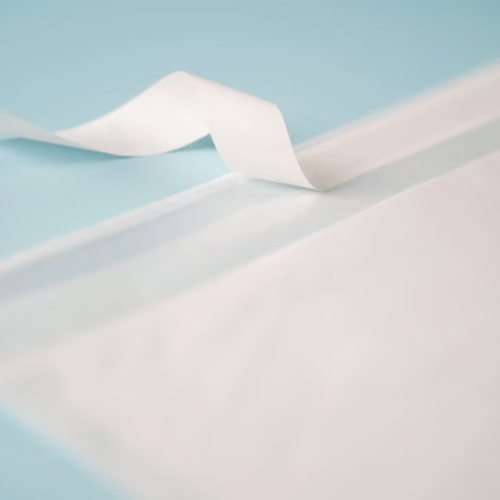
Shunya™ barrier bio coating:
no green premium, sheer performance
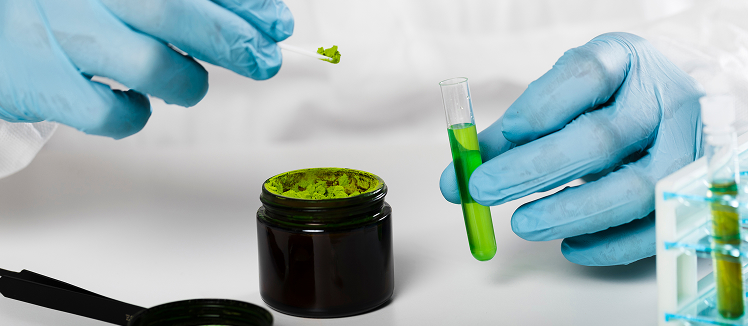

Water, Grease & Water vapour barrier in one layer

Applied through reverse gravure, hot-melt coating system

Proven food safe under BfR and cytotoxicity tests

100% recyclable with paper lines under CEPI benchmarks

PPWR compliant and helps with Scope 3 emissions reduction

Multi-layer system depending on properties require
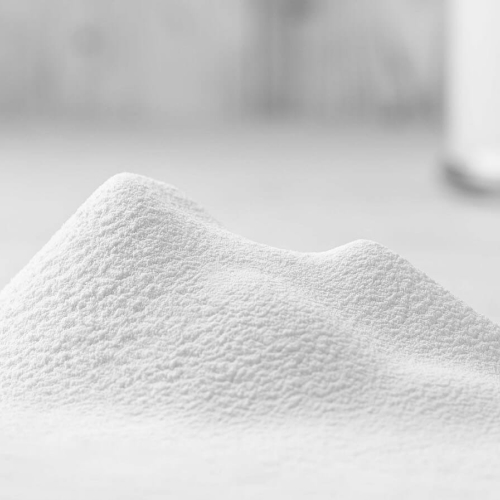
Waterless coating system is the future
In a water-dispersed coating, evaporation of water requires huge amounts of power up-to 3.3 GWh per assembly line per year. Btw, 65% of gross weight of the coating is water.
-83%
CO2 emissions (Scope 1 & 3) & water saved with Sustanix’s 100% bio-based solid coating system compared to other water-based formulations

FAQs...
Got questions? find your answers right here
Sustanix researches and manufactures bio-based molecules and materials using green chemistry to replace fossil-based inputs across industrial applications.
Our materials are derived from renewable bio-based sources and produced using green chemistry principles, significantly reducing environmental impact compared to traditional fossil-based materials.
Yes. Our bio-based materials are engineered to match or exceed the performance of conventional fossil-based alternatives without compromising quality, durability, or efficiency.
Absolutely. Our processes are designed for scalability, enabling seamless integration into large-scale industrial manufacturing while maintaining performance and sustainability.
We serve a wide range of industries including chemicals, materials manufacturing, packaging, textiles, automotive, and other sectors seeking sustainable alternatives.
We ensure quality and consistency through rigorous testing, strict quality control protocols, and continuous process optimization across all stages of research and manufacturing.
Our high-performance coatings require less thickness to achieve the same protective results as traditional plastics, leading to a 15–20% reduction in material usage and direct savings in logistics and shipping weights.
The mono-material mono-layer coating already provides Water, Grease & Water Vapour barrier which is currently unheard off in bio-coating systems. Additionally, research is ongoing for another layer of coating providing very high oxygen barrier.
The coating is also designed to work on both inline and offline systems thereby both paper manufacturers and convertors can implement the system at their ends.
It has already been tested for coating ultra-low GSM paper of 22 and upto 280 GSM, thereby clearly proving it s versatality.
Water Savings: The Physical Load
Based on the transition from a 40% solids aqueous dispersion to the 100% solid Sustanix system, the calculation for water removal per industrial line is as follows:
- Dry Coating Target: 8 g/m2 (0.008 kg/m2).
- Aqueous Mix Requirement: To achieve 8 grams of dry solids from a 40% dispersion, 20 gram of "wet" coating must be applied (0.008 / 0.40).
- Water Load per m2: 20 g (Wet) - 8 g (Dry) = 12 g of water.
Annual Water Savings:
- Hourly water savings: 38,400 m2/0.012 kg/m2 = 460.8 kg/h.
- Yearly water savings(6,000h): 460.8 kg/h x 6,000 h = 2,764,800 kg/year.
Result: One single assembly line switching to Sustanix saves 2,765 tonnes of freshwater annually—water that currently evaporates into the atmosphere as waste.
Water Mass to Evaporate: To achieve 8 g/m2 dry weight from a 40% solid dispersion, a mill must apply 20 g/m2 of wet coating—meaning 12 g of water per square meter must be evaporated.
Hourly Water Load: 38,400 m2/hour x 0.012 kg = 460 kilogram of water/hour Specific Energy Demand: Evaporating water at 100o C (feed temp 25o C) with an Infrared (IR) drying efficiency of 60% requires approximately 1.19 kWh per kg of water.
Annual Energy Consumption: 460.8 kg/h x 1.19 kWh/kg x 6,000 hour = 3.3 GWh per year. 3.3 GWh = 3,300,000 kWh, 3,300,000×0.475=1,567,500 kg CO₂
Industrial drying and ventilation are the most carbon-intensive parts of the process. The carbon impact depends on whether the heat is generated via Natural Gas (common for dryers) or Grid Electricity (for fans and chillers).
- Energy Use: Approx. 2.97 GWh (90% of the total 3.3 GWh).
- Source: Usually Natural Gas (Latent heat for evaporation).
- Carbon Intensity: 0.20 kg CO2/kWh(Natural Gas).
- Carbon Consumed: 2,970,000 kWh times 0.20 kg = 594 Tonnes of CO2
1. Drying & Ventilation (The Bulk Consumption)
- Energy Use: Approx. 0.33 GWh (10% of the total).
- Source: Grid Electricity.
- Carbon Intensity (EU Average): € 0.25 kg CO2 /kWh
- Carbon Consumed: 330,000 kWh times 0.30 kg = 99 Tonnes of CO2
2. Cooling, Chilling & Controls
Total Annual Carbon Impact
Summing these up, the units you listed consume a total of:
Total Carbon Consumed: 693 Tonnes of CO₂ per year.